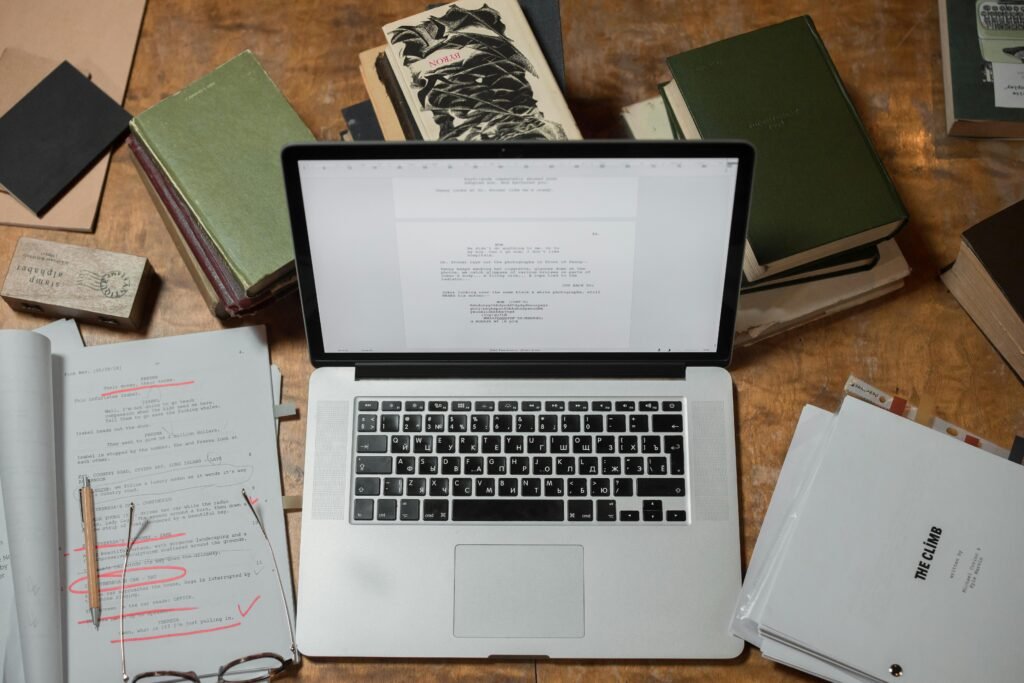
There’s a strange moment near the end of every thesis. The document looks polished. The paragraphs flow. Your AI tools have done their part, and the draft feels almost finished.
Except it isn’t. Not yet.
Anyone who has lived inside a thesis knows this feeling. The final 5–10% is where the real work hides. It’s the part no AI system can cross for you. AI can accelerate the drafting phase, and it can absolutely transform the early editing stages. But the last mile is different. It belongs to you.
This is where your thesis becomes defensible. Credible. Yours.
1. The Argument: AI Can Polish It, But Only You Can Defend It
AI is excellent at smoothing sentences, but it has no sense of whether your argument actually holds. It can’t feel when a chapter drifts away from your research question or when a conclusion quietly overreaches. It doesn’t know your field or the intellectual commitments behind your choices.
The last mile begins with a simple question: Does my argument still make sense when I read it as a scholar, not as a writer?
Only you can answer that.
2. Sources: AI Still Hallucinates, Even When It Sounds Confident
Even when you feed AI your bibliography, it can misattribute ideas or paraphrase inaccurately. This is especially true with tools that prioritize fluency over fidelity. I’ve seen this repeatedly when reviewing platforms like Jenni AI. It’s a strong drafting assistant, but it can still misread or over‑interpret sources.
Academic writing depends on precision. That means checking your citations against the original texts, not the AI’s interpretation of them.
Slow work, but essential.
3. Terminology: AI Loves Synonyms, Academia Does Not
One of the quiet ways a thesis loses authority is through terminology drift. AI models vary phrasing because variation is rewarded in general writing. Academic writing works differently. One term per concept, consistently used.
If you call something “late Hellenistic Rhodes” in Chapter 1, you cannot let it become “post‑Classical Rhodes” in Chapter 3. AI won’t catch this. You will.
4. Structure: AI Can Fix Sentences, Not Chapters
AI can make a paragraph clearer, but it cannot tell you whether a section belongs in another chapter or whether your introduction prepares the reader for what follows. Structural coherence is a human judgment. It’s the sense of whether the architecture of the thesis matches the logic of the argument.
If you need help diagnosing structural weaknesses, the best AI tools for academic editing can support the early stages. But the final decisions must come from you.
5. Methodology: AI Can Rewrite It, But Not Evaluate It
A methodology section is not just a description of what you did. It’s a justification. AI can make the language smoother, but it cannot tell you whether your methods are appropriate, replicable, or aligned with your research question.
Only you can decide whether your methodological choices are defensible.
6. Citation Style: AI Gets the Easy Parts Right and the Hard Parts Wrong
AI can mimic citation styles, but it struggles with the details: the commas, the multi‑author formats, the archival sources, the ancient texts, the departmental quirks. It gets you most of the way there, but the remaining inconsistencies are exactly where examiners look first.
This is why I wrote Why Grammarly Isn’t Enough article. Tools that excel at grammar often fail at academic nuance.
The last mile is a manual audit. Tedious, but decisive.
7. Visuals and Appendices: AI Doesn’t See Layout
AI can describe a table, but it cannot judge whether the table is legible when printed or whether the numbering system is coherent. Layout is a physical experience. You feel it when you hold the printed thesis in your hands.
This is why the final read should always be on paper.
8. Voice: AI Smooths, But It Also Flattens
AI tends to sand down the edges of your writing until everything sounds generically academic. But your thesis needs your voice: your discipline’s cadence, your field’s vocabulary, your way of framing ideas.
The last mile is where you restore the parts of your writing that sound like you, not like a model.
9. Departmental Rules: AI Doesn’t Know Your Institution
Every department has its own formatting rules, submission guidelines, and citation preferences. AI cannot know these, and it will not follow them unless you enforce them manually.
The last mile is bureaucratic, but it’s also where many theses lose points unnecessarily.
10. The Final Human Read: The Step Everyone Wants to Skip
Print the thesis. Sit with it. Read slowly. Mark it with a pen.
You will catch things no AI tool can detect: micro‑repetitions, awkward transitions, missing citations, sentences that looked fine on screen but collapse on paper. This is the moment when the thesis stops being a document and becomes a piece of scholarship.
The last mile is not glamorous, but it is decisive.
Why This Last Mile Matters
AI can help you write faster and cleaner. It can clear the noise, smooth the phrasing, and give you a sense of momentum when the draft feels heavy. But it cannot take responsibility for your argument, your evidence, or your academic identity. Those belong to you alone. The final sweep — the human sweep — is where you slow down enough to see what the work is actually saying, not just how well it is written. It’s the moment when you decide what you stand behind and what you need to refine.
A thesis polished by AI is a draft. A thesis refined by you is a contribution. It carries intention, judgment, and the quiet confidence of someone who has lived with their material long enough to shape it with clarity. This is the part no tool can automate, because it is the part that reveals the scholar behind the sentences.