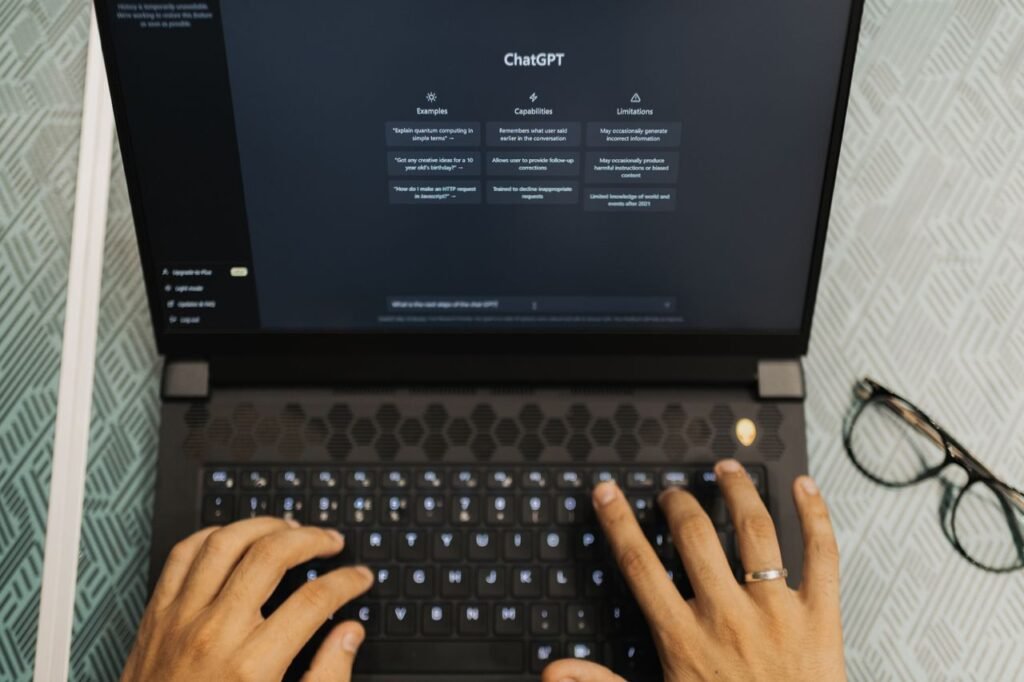
Late nights, coffee-stained notes, and the quiet hum of your laptop—that’s where real academic writing happens. Somewhere between exhaustion and obsession, you start wondering: Is this paragraph even English anymore? That was the moment I reached for AI.
In 2026, the choice usually comes down to two heavyweights. I’ve previously deep-dived into why Paperpal is the researcher’s choice and explored the limitations of ChatGPT’s “Deep Research” mode, but today we’re putting them head-to-head. One is a versatile Swiss Army knife; the other is a surgical scalpel. If you are serious about publishing, you need to know which one to trust when your credibility is on the line.
The Shift in 2026: Accuracy vs Fluency
Academic writing isn’t just about good grammar. It’s a ritual of precision—where tone, tense, and rhythm convey authority. In 2026, journals have become hyper-sensitive to “AI-isms.” A misplaced adjective can make a confident claim sound like a guess, and a generic “AI-sounding” sentence can trigger a desk rejection before a human ever reads your work.
I decided to test both tools on a 6,000-word research draft, comparing them on the three pillars of modern academia: Precision, Integrity, and Workflow Integration.
Paperpal: The Editor Who’s Read Every Journal
The first thing that strikes you about Paperpal in 2026 isn’t the interface—it’s the discipline. Unlike standard AI writing tools that often overwhelm you with generic suggestions, Paperpal is trained on over 10 billion words of published scholarly text.
When I dropped my text in, it didn’t try to rewrite my style or sound “smarter” than me. It simply corrected what needed correction.
1. Surgical Trimming for Word Counts
One of the biggest headaches in academia is hitting that 3,000-word limit without losing your soul. Paperpal’s “One-click Trim” tool is specifically engineered for this. Unlike ChatGPT, which might summarize and accidentally cut a crucial citation, Paperpal identifies “academic bloat” (phrases like “It should be noted that…”) and replaces them with direct, concise alternatives.
2. The “AI Footprint” & Disclosure
This is the game-changer for 2026. Major publishers like Elsevier and Nature now require a Generative AI Declaration. Paperpal’s new AI Footprint feature tracks every single change made by the AI in real-time. When you’re ready to submit, it generates an automated “AI Disclosure Report” that you can attach to your manuscript. It’s the ultimate safety net for your reputation.
3. Subject-Matter Sensitivity
Paperpal understands the difference between a “Control Group” and a “Comparison Group.” In my tests, it respected the cautious nature of scientific claims, suggesting I change “this proves” to “the evidence indicates.” This level of nuance is why Paperpal beats Grammarly every time for technical drafts.
ChatGPT: The “Creative Architect” (v5.2)
Then there is ChatGPT-5.2. In 2026, OpenAI introduced the “Thinking Mode,” which allows the AI to “pause” and deliberate for several minutes before outputting a complex analysis.
1. The Logic Wizard
Give it a messy draft, and ChatGPT will instantly produce something that sounds polished and fluent. Its greatest strength is restructuring. If the logical flow of your “Discussion” section feels off, ChatGPT can re-order your arguments better than almost any human assistant. It sees the “big picture” that Paperpal often ignores.
2. The “Poet” Problem (The Accuracy Gap)
However, its greatest strength is also its weakness. In my tests, ChatGPT occasionally removed citations because it wanted to “streamline” the paragraph. It often reworded hypotheses so elegantly that it slightly altered their technical meaning. This is why most “best AI writing tools” lists are misleading; they judge tools on how “nice” the text looks, not how accurate the data remains.
3. Handling Data & Agents
Where ChatGPT-5.2 excels is its Agentic Research. If you need to summarize 50 PDFs to find a specific trend for your Literature Review, ChatGPT’s 256k context window is unmatched. It can build tables, suggest charts, and even run Python code to verify your stats—tasks Paperpal isn’t designed for.
The Stress Test: A Side-by-Side Comparison
| Feature | Paperpal (Academic Focus) | ChatGPT-5.2 (General Purpose) |
| Grammar Correction | Scholarly tone; keeps jargon intact. | Fluent; sometimes over-simplifies jargon. |
| Citations | Never touches them; 100% safe. | High risk of removal or “hallucinating” sources. |
| Word Count | Precise “Trim” tool (preserves meaning). | Summarizes (risks losing detail). |
| Ethics | Automated AI Disclosure Reports. | No built-in tracking for journal compliance. |
| Research | Searches 250M+ research papers. | General web search + user-uploaded files. |
The 2026 Hybrid Workflow: My Secret Sauce
After months of side-by-side use, I’ve learned they aren’t enemies; they are partners. I’ve turned weeks of revision into days by using this “Stacking” strategy:
- Draft with ChatGPT: Build the “bones” and transitions. Use “Thinking Mode” to brainstorm the core argument.
- Verify with Frase: I move my outline into Frase to ensure my abstract is optimized for Answer Engine Optimization (AEO). You want other AI agents to find and cite your paper, right?
- Refine with Paperpal: This is my final gatekeeper. I use it for the final polish to ensure the tone is purely academic and that no accidental AI-hallucinations have slipped in from the ChatGPT phase.
- Final Integrity Check: Run the Paperpal “Submission Readiness” report to check for missing disclosures or citation errors.
Who Should Use What?
Buy Paperpal If…
You are a PhD student, researcher, or faculty member writing for high-impact journals. If you have ever been told your English “needs a native speaker’s touch,” Paperpal is your best friend. It provides the surgical precision required to survive peer review. (Check our Paperpal vs Wordvice review if you need a specialized human-AI hybrid).
Use ChatGPT If…
You are in the brainstorming phase or writing a first draft of a non-technical essay. It is excellent for “rubber-ducking” your ideas and finding the right structure. However, never submit a ChatGPT-edited paper without running it through an academic-specific check first.
Final Summary
In 2026, academic writing isn’t just communication; it’s credibility. Paperpal was built to protect that credibility, while ChatGPT was built to communicate generally.
- ChatGPT is the Artist—expressive, bold, experimental.
- Paperpal is the Craftsman—precise, disciplined, and quietly brilliant.
Together, they make academic writing faster, smarter, and—strangely—more human.